
How to move apparel production from China to Mexico (2026 guide)
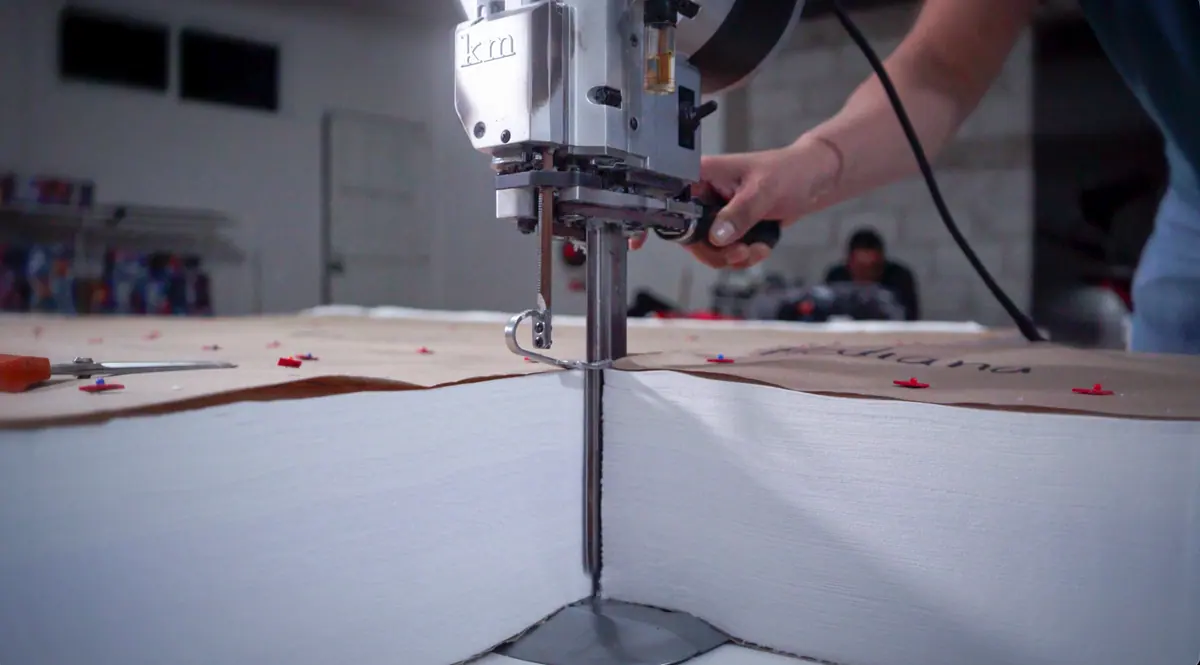
If your brand makes T-shirts, hoodies, pajamas or polos in China, 2026 has probably made you look at Mexico. This guide explains in plain terms what changes in duties, what it takes for a garment to enter the US duty-free, and how to move one style at a time without risking your season. We are Grupo ValVa, an apparel factory in Tlaxcala, Mexico, so we'll also be clear about where Mexico is a good fit and where it isn't.
Why brands are looking at Mexico in 2026
- Extra duties on Chinese apparel: Apparel from China pays the regular US duty plus an extra 7.5% Section 301 duty that applies only to China. In February 2026 the Supreme Court struck down the tariffs imposed under IEEPA, but the China-only Section 301 duties remain.
- Duty-free access under USMCA: Garments made in Mexico that meet the USMCA rules of origin enter the US with 0% duty.
- A shorter supply chain: Orders from central Mexico reach the US by truck in days, not by ocean in weeks, so you can restock during the season.
- Smaller runs: Many Mexican workshops accept small minimums, so you can test a style before moving your whole line.
What a T-shirt pays to enter the US
| Knit T-shirt | Made in China | Made in Mexico, meets USMCA |
|---|---|---|
| Cotton | 16.5% + 7.5% = 24% | 0% |
| Polyester | 32% + 7.5% = 39.5% | 0% |
If a garment made in Mexico doesn't meet the USMCA rules (for example, because its fabric comes from Asia), it pays the regular duty only: 16.5% for a cotton T-shirt and 32% for polyester. That is still less than China, but the big saving comes from qualifying.
These are the general US duty rates for knit T-shirts (HTS 6109) as of November 2026, before any temporary surcharge. Other garments have other rates, so confirm your product's classification with your customs broker.
The key rule: yarn forward
Sewing a garment in Mexico is not enough to enter duty-free. Under the USMCA yarn-forward rule, the yarn must be made in North America (Mexico, the US or Canada), the fabric must be knitted or woven in the region, and the garment must be cut and sewn there. Sewing thread, pocket bag fabric and narrow elastic must also come from the region.
- Cotton: Mexico has cotton spinning and knitting mills, so T-shirts, hoodies and pajamas in Mexican cotton can qualify. Ask your factory for documents that show where the yarn and fabric were made.
- Polyester: Much of the polyester used for sublimation in Mexico is imported from Asia. Garments made with it can still be sewn in Mexico, but they don't qualify for USMCA. Ask your factory whether North American polyester is available for your product.
- Bamboo and specialty fabrics: If your fabric is only made in Asia, your garment won't qualify. A cotton version of the same style is often the simplest way to get the duty-free benefit.
One exception is worth knowing: USMCA sets a yearly quota, called a tariff preference level (TPL), that lets a limited amount of Mexican apparel made with non-North American fabric enter at the preferential rate. For cotton and man-made fiber apparel from Mexico it is 45 million square meter equivalents a year, shared by all exporters. Your customs broker can tell you if it's available for your shipment.
Is Mexico cheaper than China?
Not always per piece. Labor in Mexico usually costs more than in many Asian countries. But the price per piece is only part of the cost: duties, ocean freight, large minimums and inventory bought months in advance all add up. For brands that sell in the US and launch small or frequent drops, the total cost can end up similar, with less risk.
- Mexico is a good fit if: you sell mainly in the US, launch frequent or seasonal drops, want to test styles in small runs, or your garments can be made in North American cotton.
- China may still win if: you order very large volumes of one basic style, need a specialty fabric only made in Asia, or sell mainly outside North America.
How to make the switch, step by step
- 1. Pick one or two styles: Start with a best seller in cotton knit, like a T-shirt or hoodie. It's the easiest to qualify and to compare.
- 2. Send a tech pack or a sample: Share measurements, fabric, print method and trims. A physical sample from your current factory helps a lot.
- 3. Choose the fabric: Decide with the factory whether you'll use North American fabric (for USMCA) or keep your current fabric.
- 4. Approve a sample: Check fit, print and wash results before production, side by side with your sample from China.
- 5. Run a small pilot: Produce a small first order and test the whole process: production time, packing, shipping and customs.
- 6. Prepare the paperwork: To claim USMCA, the importer, exporter or producer completes a certification of origin. Your customs broker uses it for the entry.
- 7. Scale up: Once the pilot works, move more styles and plan your seasons around shorter lead times.
Questions to ask a Mexican factory
- Do you have your own workshops? Some suppliers are brokers who subcontract. Ask to see the production floor, even on a video call.
- What are your minimum and lead time? They tell you how fast you can test a style and restock.
- Where do your yarn and fabric come from? This decides whether your garments qualify for USMCA.
- Can you make a sample first? A good factory will want you to approve fit and print before production.
- Do you have a social compliance audit? Large retailers and licensors often require audits such as SMETA or WRAP. Ask if the factory has one or is working on it.
About Grupo ValVa
Grupo ValVa is an apparel factory in Xicohtzinco, Tlaxcala, in central Mexico. We have been doing sublimation for 10 years, with cutting, sewing and packaging in our own workshops, plus embroidery, and capacity for more than 50,000 garments a month. We start at 12 pieces per design, production usually takes 15 days, and we can make T-shirts, hoodies and pajamas in Mexican cotton for USMCA orders.
Get a quote for one of your stylesThis guide is general information, not legal or customs advice. Duty rates change, so confirm them for your product before you import.
Sources
- Harmonized Tariff Schedule of the United States (USITC)
- USMCA, Chapter 6: Textile and Apparel Goods (USTR)
- Summary of the USMCA textile and apparel rules (International Trade Administration)
- USMCA tariff preference levels for Mexico (CBP quota bulletin)
- Supreme Court strikes down IEEPA tariffs (WilmerHale)